I… I’ve never told anyone, but… I’ve always thought they were lighthouses. Billions of lighthouses…stuck at the far end of the sky.
With the re-release of Ken Gao’s To The Moon on Nintendo Switch yesterday, it occurred to me that not many games revolve around the topic of autism, otherwise referred to ASD (Autistic Spectrum Disorder). If you haven’t played the game, the general consensus is that River, the wife of Johnny, the game’s protagonist, is on the autistic spectrum. It was the first time I had seen an autistic character in a game of any gender. After reflecting on this, I was curious to search for other games that feature autistic characters. Not only did I find it difficult to find any games, but I discovered that typing ‘autism and games’ into a search engine leads to links only covering the topic of ‘video game addiction’ in teenage boys. Unfortunately, this was unsurprising.
As a woman who is awaiting an ASD assessment, I would like to write about my experience of playing video games and how they have added to my quality of life. First of all, however, I feel that it would be appropriate to discuss how I think I may be affected by autism in order to give this post some context.
Autism, to me, until very recently was something that I always associated with males. I had never encountered a female with autism, apart from children I have worked with in the past who were non-verbal. It appears that women must have the severest symptoms of autism in order to receive clinical diagnoses, whereas women (such as myself) who are elsewhere on the spectrum are too often misdiagnosed with mental illnesses. A number of mental health problems can manifest as a result of women trying their best to cope and mask in a neurotypical society.
It was only until it was pointed out by a couple of people that I began to consider this maybe is something that is affecting my life. At first, I denied it and even felt offended. I had tried so hard to fit in, be like others, do my utmost to blend in. I just thought I had never outgrown my (often painful) shyness. That the level of anxiety I experienced everyday was normal for everyone else. Then I began to question: was my reluctance to go to secondary school where there was too much change in swapping classrooms and teachers every lesson, my technical love for words (despite my lack of comprehension), sensory overload, not knowing when it’s my turn to talk, preference to online relationships, symptomatic of autism? I feel quite embarrassed to admit, that, as a teenager, I used to study how-to-talk-to-people articles online and observe pictures in order to understand body language. I would use this newly-acquired knowledge to apply in my daily life, while I was experiencing the culture shock of attending sixth-form college. I began to see myself relying on the eyes of others. My eldest brother taught me to make more eye-contact to ‘show people [I] was interested’ in conversations. Supposed ‘friends’ during fresher’s week at University told me to talk more as they found me suspiciously quiet; they preferred it when I drank alcohol because it made me more fun to be around. My ex-partner made me change my entire wardrobe in an attempt to emulate Kate Middleton’s style because I didn’t know how to dress myself’. While I did, indeed, know how to literally dress myself, it appeared that I lacked any fashion sense. I never questioned my ex because I wanted to look my best, but in hindsight, I wanted to fit into his (and the rest of society’s) mould of what was considered a normal person. I was quite happy wearing t-shirts with the Hogwarts house emblems on the front, but I was eventually stripped of my own personality and self-respect until I had the opportunity to learn more about myself over the upcoming years (the sweet cliche of self-discovery in your late-twenties!) Of course, I have been lucky enough to have made wonderful friends in this time, but they are few. I am glad to say that although I don’t see them often, I feel that I can be myself around them when I do. I trust their opinions because they stem from a genuinely good place.
Perhaps one of the things that I never grew out of but was instructed to leave behind (sadly because of previously mentioned ex) was gaming. This was hard for me because it was one of the ways in which I felt I could connect to other people. I remember once talking to a guy with ASD at University who said he played Streets of Rage when he was younger and still had a copy with him. I told him, ‘I LOVE Streets of Rage!’ Shortly afterwards, we had a go at playing co-op together. The reason I go back to this is because I used to watch my brother play Streets of Rage from when I was two/three years old. I would sit next to him, cross-legged, on the floor and stare at the TV watching him play it. I liked the character Blaze best because she had a cool red outfit and she did the best kick. Eventually I started playing co-op with my brother. Then I’d play Sonic. Then I’d play Altered Beast. Golden Axe. The list goes on…
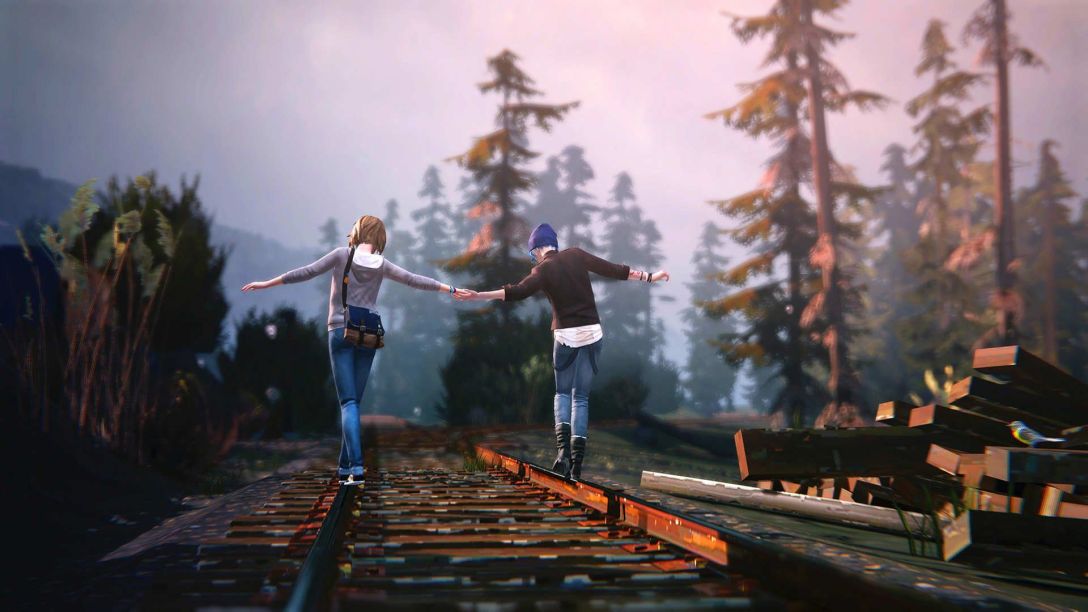
Up until I went to University, I would continue to play video games. One of my fondest memories were Shenmue I and II being released. My brother and I also played Halo together which was awesome. It was my way of sharing stories and creating memories with him. We wouldn’t have to look at each other and we’d talk ‘to’ the game, if anything. We would chuckle at silly commentaries we’d make up. There was no social pressure at all. Just fun chatter, great soundtracks and engrossing stories. I liked going to worlds that I hadn’t been to and letting my imagination run wild. I incorporated this idea into a photography project during college. Since returning to gaming, though, my brother and I got together again and played Outlast, Outlast: Whistleblower and Outlast II and had so much fun. I have also enjoyed playing games on my own again, and I have become fascinated with the lore that came along with more recent games with their increasingly complicated plots and sophisticated graphics. The way in which audiences can interact with these universes have changed dramatically and this has provided an opportunity for me to engage with others more easily. The Life is Strange franchise, for example, has led me to reading comics, books, Discord theory chats, Twitter discussions, listening to vinyls, collecting figures, and even getting a tattoo from the original concept art. I related to Max Caulfield so much. I see her as the archetypal ‘hipster’ photography student I wanted to be in 2009. She can time travel (one of my favourite topics but unfortunately something I am not capable of!), she listens to music I listen to, has a Polaroid camera like I do, studies books I have read, plays acoustic guitar like I do, is a bit of an outsider and a loner like I consider myself being. All the photographers mentioned were photographers I knew of. It was a universe that felt oddly comforting. Something about it was almost homely, if that makes sense at all. The autumnal hues and the background folk music were soothing and made me feel nostalgic for a time I had never experienced. The act of making decisions and being able to alter them afterwards to gain an insight into what was really going on really resonated with me. The friendship with Chloe made me laugh and cry. Needless to say, I have ‘studied’ the game and all possible narrative branches in an effort to learn as much as I can about the mechanics and composition of the game. I have therefore lost count of how many times I’ve played it. Some would consider it an unhealthy obsession, whereas I now consider it to be a ‘special interest’ that doesn’t consume my life – but is the result of enthusiasm, enjoyment and sheer admiration for the people who made it.
Video games are also a way for me to connect in my current relationship. My partner is wonderful and loves the Final Fantasy franchise, and I share that with him too. We’ve been to Distant Worlds events together and held hands while listening to live orchestral music that means a lot to the both of us. We even dressed up as two characters from Final Fantasy IX. This is why I believe video games bring people together, as opposed to further apart. For autistic people, video games can provide meaning in a world where reality is chaotic, confusing and awkward. They can provide opportunities to create relationships, which are, even for neurotypicals, difficult to forge. It’s not a chance to hide away from the difficulties of real life – it is a chance to recuperate, just as reading a book or watching a television series would.
Like mental health has been implemented into games in recent years (I’m currently thinking of Kate Marsh in Life is Strange), it would be encouraging to see more games being published which represent autism as To the Moon did back in 2011. While To the Moon doesn’t shy away from the realities that autism presents, it refreshingly displays a female character who doesn’t conform to gender stereotypes. River is not defined by her challenges, but is loved for who she is and how she sees the world.

 Assassin's Read